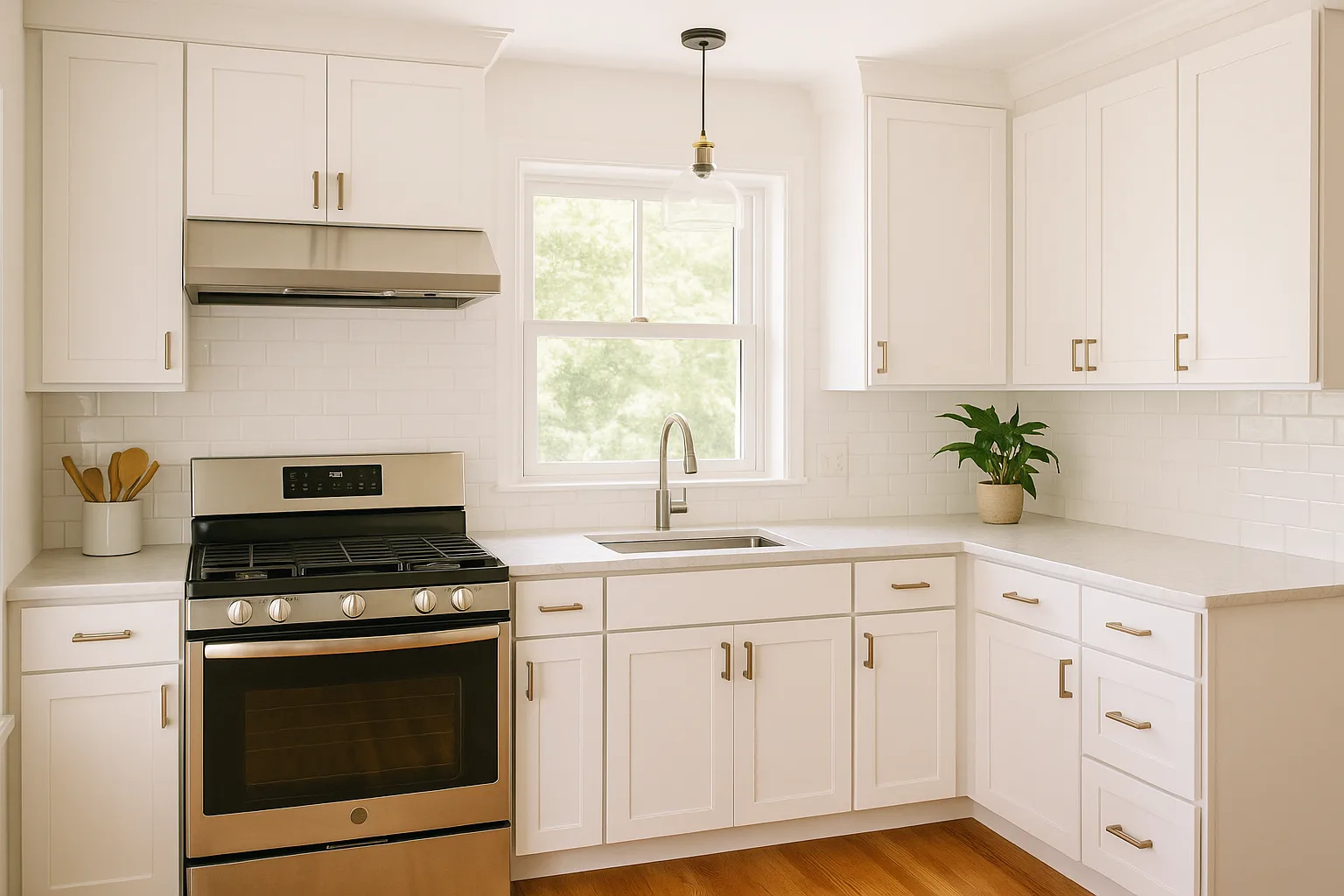
Kitchen remodels carry wide cost ranges because the kitchen touches almost every expensive category at once: cabinets, counters, appliances, plumbing, electrical, lighting, flooring, paint, trim, and sometimes structural changes. A cosmetic refresh and a true layout-changing remodel are not the same job, even if both are called a kitchen remodel.
For planning, a lighter update may start around $15,000 to $25,000, a solid mid-range remodel often lives around $25,000 to $60,000, and a major layout change or premium custom kitchen can climb well beyond that. Cabinet scope is often the center of gravity, but appliances, electrical, and layout decisions can move the total just as hard.
If you are budgeting a kitchen, the smartest thing you can do early is define whether you are refreshing what exists or rebuilding the room around a new layout and higher-performance finish level.
Planning table
Typical cost ranges at a glance
| Scope level | Typical range | What that usually includes |
|---|---|---|
| Refresh or partial update | $15,000 to $25,000 | Painted or refaced cabinets, counters, backsplash, fixtures, selected appliance updates. |
| Mid-range remodel | $25,000 to $60,000 | New cabinets and counters, flooring, lighting, appliances, moderate trade coordination. |
| Major redesign or premium kitchen | $60,000+ | Layout changes, custom cabinets, premium appliances, structural work, or extensive finish upgrades. |
What moves the number
The biggest cost drivers to pressure-test in quotes
| Cost driver | Impact | Why it matters |
|---|---|---|
| Cabinet scope | High | Keeping, refacing, repainting, or replacing cabinets changes the whole project direction. |
| Layout moves | High | Relocating plumbing, gas, islands, or major electrical lines adds real coordination cost. |
| Finish stacking | Medium | Counters, appliances, lighting, and hardware often blow up the budget through many smaller upgrades. |
Turn this into your real project
Upload a photo and get a tighter range for your actual space.
These guides are here to orient you. Naili gets more useful when it can see your actual room, yard, roofline, or project area and turn that into a clearer brief before contractor quotes start.
Cabinets usually set the tone for the whole budget
Cabinets are often the single biggest kitchen cost bucket, which is why the project direction changes so much depending on whether you keep them, reface them, repaint them, or replace them entirely. Many kitchen budgets are really cabinet decisions wearing a kitchen label.
If your layout works and the cabinet boxes are solid, refinishing or refacing can stretch the budget dramatically. If the boxes are failing, the storage layout is frustrating, or the room needs a different functional flow, replacement becomes easier to justify.
Custom cabinetry can be worth it for difficult layouts or homeowners with specific storage needs, but it should be a conscious investment. Once custom cabinets enter the scope, the rest of the kitchen often rises to meet them.
Layout changes are where kitchens get expensive fast
Moving plumbing, gas, or major electrical lines is what turns a kitchen refresh into a deeper remodel. New islands, relocated sinks, wall removals, larger openings, and appliance relocations can all be worthwhile, but each one pulls more trades and coordination into the job.
That is not a reason to avoid layout changes. It is a reason to be deliberate about them. If the existing kitchen truly does not function, a better layout may be the most valuable part of the project. But if the new layout is only marginally better, the additional cost may not be worth the disruption.
A good contractor or designer should be able to explain which layout moves are load-bearing on price and which ones are relatively light. Homeowners make better tradeoffs when that distinction is obvious.
Appliances, counters, and finishes can quietly stack up
Kitchen projects often blow past budget not because of one huge mistake, but because of a chain of medium upgrades. Better range. Better hood. Better counter edge. Better hardware. Better faucet. Better under-cabinet lighting. Better flooring. Each one sounds reasonable in isolation. Together they can move the project by many thousands of dollars.
Countertops are a good example. Homeowners may compare one slab choice to another, but the real price often includes cutouts, seams, backsplash details, edge selections, demo, transport, and install access. The label on the material is only part of the story.
Appliances behave the same way. A pro-style range or built-in refrigeration may not just cost more itself, it can also change electrical, gas, ventilation, cabinetry, and install requirements.
The labor side of kitchen remodels is heavier than it looks
Kitchens require sequencing across many trades, and that coordination is expensive for a reason. Demo, rough carpentry, plumbing, electrical, drywall, flooring, cabinet install, counters, backsplash, finish plumbing, finish electrical, paint, and punch all have to line up. Scheduling and project management are part of what you are buying.
This is also why kitchen bids that seem dramatically low deserve extra scrutiny. Sometimes the scope is simply smaller. Sometimes the contractor is expecting large allowances or future change orders. Sometimes the labor plan is not realistic. All three are common.
Get a custom estimate for your specific space, upload a photo and we will build the brief. A kitchen quote goes better when you can hand contractors a planning-grade scope instead of a loose mix of inspiration photos and verbal hopes.
How to compare kitchen quotes without losing the plot
Make sure the same assumptions are being priced. Cabinet type. Counter material allowance. Appliance package. Flooring area. Backsplash scope. Lighting count. Plumbing changes. Permit handling. Demo and disposal. Painting. Trim. If those details vary, the headline number is not enough to tell you anything useful.
Also pay attention to allowances. Some contractors quote lower by using unrealistically low allowances for cabinets, counters, tile, or appliances. The price looks attractive until you start selecting real products and discover you were never actually inside budget.
A useful kitchen quote should help you make decisions, not hide them. The more clearly the contractor separates base scope from optional upgrades, the more likely the project will stay understandable when pressure rises.
Frequently asked questions
Common follow-up questions
What is the fastest way to control kitchen remodel cost?
Keep the layout, reuse or rework cabinetry when it makes sense, and avoid stacking too many premium appliance and finish upgrades at once.
Is a kitchen remodel mostly labor or materials?
It is both, but trade coordination and install labor are a major part of the bill because kitchens involve so many systems in one room.
Can I remodel the kitchen in phases?
Sometimes, but kitchens are highly interdependent. Phasing can work, though it may reduce efficiency and extend disruption.
Why do kitchen quotes vary so much?
Cabinet scope, layout changes, appliance assumptions, allowances, and trade coordination are the biggest reasons.