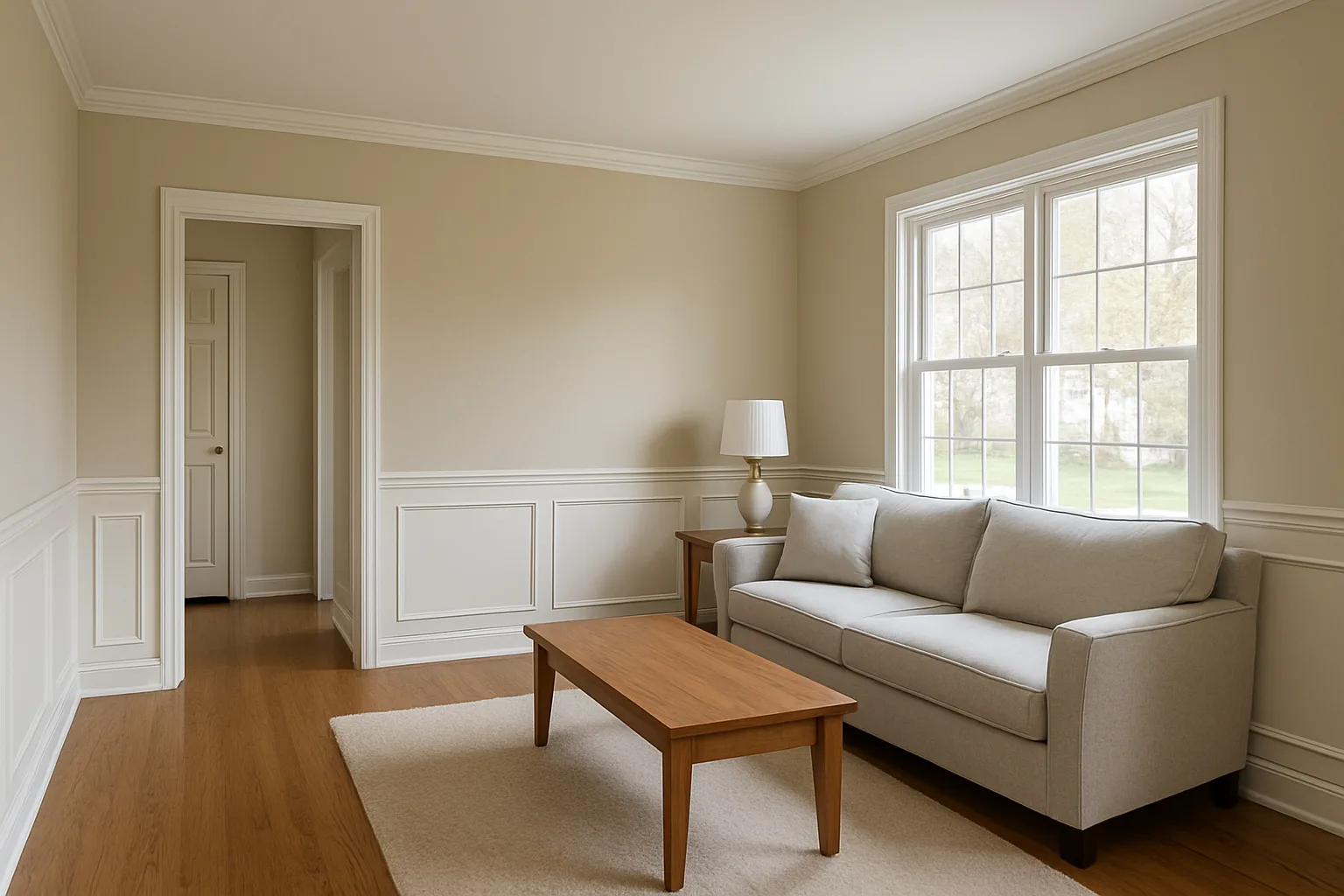
Interior painting is one of the easiest projects to underestimate because it looks simple from the outside. Homeowners see paint and labor. Painters see prep, patching, trim detail, ceiling height, masking, moving furniture, multiple coats, sheen changes, and cleanup.
A single-room repaint can be a few hundred dollars on the low end, but a whole-home repaint with ceilings, trim, doors, patching, and better-quality coatings can rise into the many thousands. For planning, many homeowners will see roughly $2 to $6 per square foot for typical wall painting, with higher all-in pricing when trim, ceilings, extensive prep, and difficult access get layered in.
The cleanest way to budget interior paint is to think in terms of surfaces, prep severity, and finish expectations. Once you do that, painter quotes start making a lot more sense.
Planning table
Typical cost ranges at a glance
| Scope level | Typical range | What that usually includes |
|---|---|---|
| Single room refresh | $400 to $1,200 | Basic walls, limited prep, normal ceiling height, homeowner-provided clearing. |
| Multi-room repaint | $2,000 to $6,000 | Several rooms, standard prep, trim and ceilings depending on scope. |
| Whole-home interior | $5,000 to $15,000+ | Large square footage, heavy prep, doors, trim, ceilings, stairwells, or premium coatings. |
What moves the number
The biggest cost drivers to pressure-test in quotes
| Cost driver | Impact | Why it matters |
|---|---|---|
| Prep severity | High | Patching, sanding, stain blocking, and problem walls usually matter more than paint gallons. |
| Surface count | High | Walls only prices differently than walls, ceilings, trim, doors, and closets. |
| Access and occupancy | Medium | High ceilings, furnished rooms, stairwells, and occupied spaces increase labor time. |
Turn this into your real project
Upload a photo and get a tighter range for your actual space.
These guides are here to orient you. Naili gets more useful when it can see your actual room, yard, roofline, or project area and turn that into a clearer brief before contractor quotes start.
Prep work is often the real job
A straightforward repaint on smooth walls is one thing. A house with nail pops, repaired texture, smoke staining, water marks, glossy old trim, or dark-to-light color changes is another. Good painters price the prep because prep is what makes the finished result actually look professional a month later.
This is also why the cheapest paint quote can be misleading. If one painter is planning a proper wash, patch, sand, caulk, prime, and two-coat system while another is basically planning to cut in and roll over problems, the labor hours will not look remotely the same.
When you compare bids, ask one question early: what prep is included? That single question usually tells you more about the seriousness of a painting proposal than the final number alone.
Walls only versus walls, trim, ceilings, and doors
Homeowners often say “paint the room” when they really mean a different scope than the contractor heard. Some painters hear walls only. Others assume walls and ceilings. Others assume walls, ceiling, baseboards, casings, and doors. That difference can move a quote dramatically.
Trim and doors are slower than walls because they involve cleaner lines, more prep, and a different finish expectation. Ceilings add more labor than many people expect, especially on vaulted spaces, stairwells, or rooms with heavy lighting that reveals every flaw.
If you want crisp quote comparisons, break your scope into buckets. Walls. Ceilings. Trim. Doors. Closets. Accent walls. Cabinet painting. That level of specificity sounds fussy, but it prevents most of the confusion that shows up later as “I thought that was included.”
The home factors that change painting cost fast
Ceiling height matters. Open stairwells matter. Furnished rooms matter. Pet hair, nicotine staining, heavy patching, wallpaper removal, glossy existing coatings, and dark colors matter. None of these issues are exotic, but each one adds labor, material, or both.
Older homes can also create more prep and trim detail. Character is great. Intricate casing profiles, plaster repair, and old damage hidden under years of touchups are less great from a pricing standpoint. A painter who has actually looked at the house should talk about these issues clearly.
Paint quality matters too, but less than homeowners sometimes think. The labor usually dominates. Upgrading from entry-level paint to a better mid-tier system will increase cost, but it is rarely the only thing making one quote much higher than another.
Room-by-room budgets versus whole-home budgets
Room pricing is useful if you are doing the work in stages. A bathroom, bedroom, living room, or kitchen can each be scoped separately and scheduled around your life. This helps if budget is tight or if you are trying to reduce disruption.
Whole-home pricing is often more efficient on a cost-per-room basis because crews mobilize once, materials are bought together, and production stays steady. That does not mean the total is small, only that the unit economics usually improve when a painter can work through the house logically instead of bouncing in and out later.
Get a custom estimate for your specific space, upload a photo and we will build the brief. Naili can help you organize what is included so a whole-home repaint quote is based on the same assumptions from one painter to the next.
How to compare painter bids honestly
Ask for the exact surfaces included, the paint brand and line, the prep steps, the number of coats, who moves and protects furniture, and whether touchups are part of the closeout. A good bid does not need to be pages long, but it should answer those questions plainly.
Also ask how the contractor handles repairs discovered during prep. Some minor patching may be included. Heavy drywall repair, texture work, rot, or stain-blocking may require an allowance or change order. Better to know that before the crew starts, not after the house is already taped off.
If one estimate is far lower than the others, it is usually because scope is different, prep is lighter, insurance or staffing is thinner, or the contractor simply needs work. Sometimes that works out. Often it does not. Interior painting is a project where process quality shows up quickly.
Frequently asked questions
Common follow-up questions
Is interior painting priced by the room or by square foot?
Both show up in the market. Square-foot pricing is common for planning, but many painters convert the real scope into room-based or surface-based numbers after a walk-through.
Do I need to move furniture myself?
Sometimes yes, sometimes no. The bid should say clearly whether the crew is handling furniture movement, protection, and reset.
How many coats should I expect?
Two finish coats are common for cleaner coverage, especially on color changes or repaired surfaces, but a painter should state the system rather than leave it vague.
What makes painting quotes vary so much?
Prep severity, trim and ceiling scope, access difficulty, and the level of finish expected usually matter more than the paint itself.