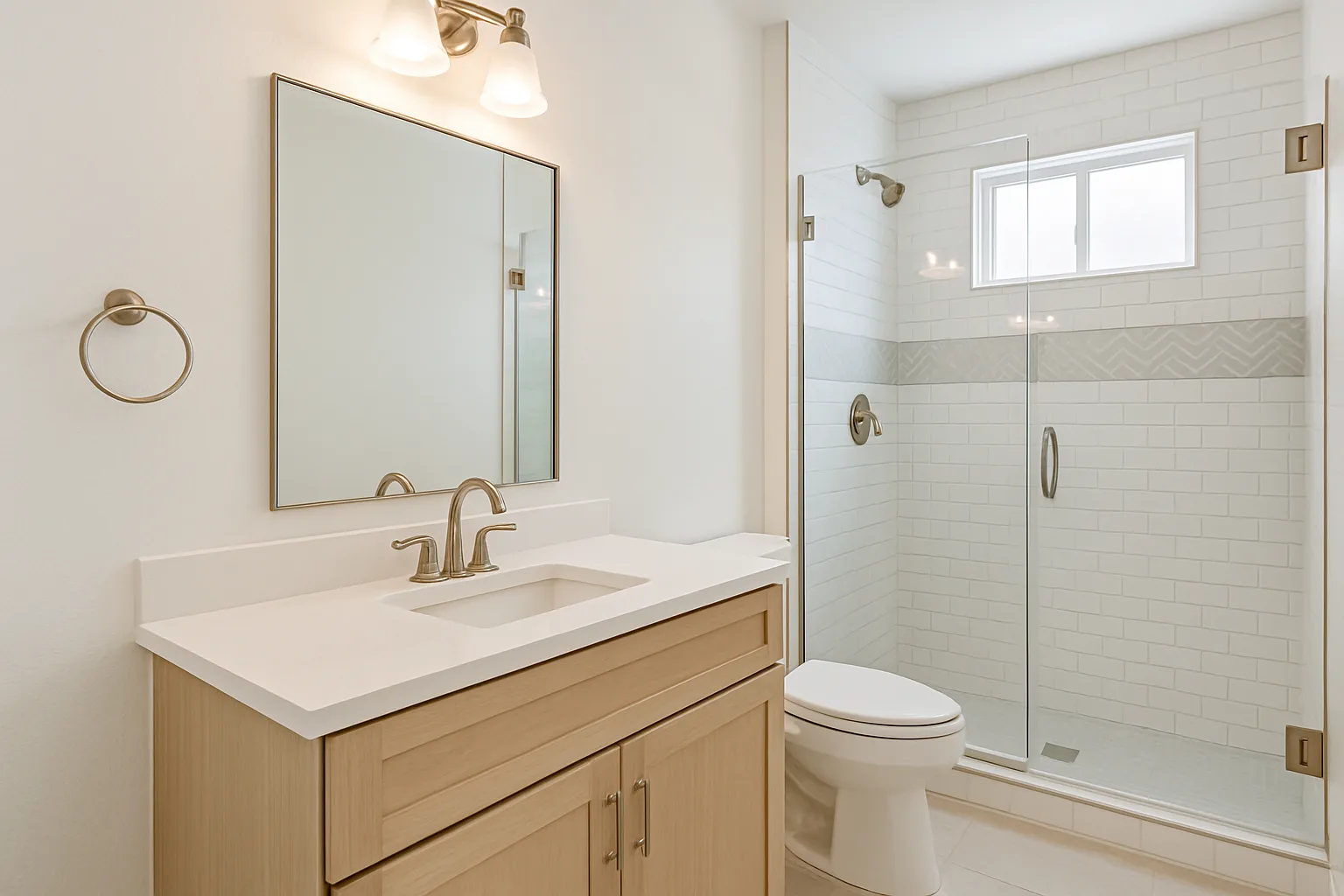
Most bathroom remodels land inside a very wide range because homeowners use the same phrase to describe very different jobs. A quick cosmetic reset, a shower replacement, and a full gut remodel all count as a bathroom remodel, but they do not behave the same way on price.
As a planning rule of thumb, a light bathroom refresh often starts around $8,000 to $15,000, a solid mid-range remodel often lands around $15,000 to $30,000, and a full layout-changing or high-end primary bath can move well beyond $30,000. In higher-cost metros, complicated tile work, glass, stone, or plumbing changes can push the number higher fast.
The useful question is not just “what does a bathroom remodel cost?” It is “what exact scope am I asking contractors to price?” The tighter your scope, the easier it is to compare quotes and the less likely you are to get surprised by change orders later.
Planning table
Typical cost ranges at a glance
| Scope level | Typical range | What that usually includes |
|---|---|---|
| Cosmetic refresh | $8,000 to $15,000 | Paint, vanity, fixture swaps, limited tile, minimal plumbing changes. |
| Mid-range remodel | $15,000 to $30,000 | New finishes throughout, better shower/tub work, some electrical and plumbing updates. |
| Full custom or layout change | $30,000+ | Moving plumbing, premium materials, extensive tile, larger primary baths, or structural work. |
What moves the number
The biggest cost drivers to pressure-test in quotes
| Cost driver | Impact | Why it matters |
|---|---|---|
| Layout changes | High | Moving shower, toilet, or vanity locations pushes plumbing, electrical, and labor up quickly. |
| Tile scope | High | Large-format tile, ceiling-height runs, niches, and specialty layouts add both material and installation cost. |
| Fixture and glass level | Medium | Premium plumbing trim, frameless glass, and custom vanities stack up fast in smaller rooms. |
Turn this into your real project
Upload a photo and get a tighter range for your actual space.
These guides are here to orient you. Naili gets more useful when it can see your actual room, yard, roofline, or project area and turn that into a clearer brief before contractor quotes start.
What moves the bathroom budget the most
The biggest cost driver is whether you are keeping the existing layout. If the toilet, vanity, or shower stay in roughly the same places, your project usually stays much more predictable. Once drain lines, supply lines, venting, or electrical locations move, labor climbs and coordination gets harder.
Tile is the second big swing factor. A small room can still become expensive if you choose a lot of tile, run it to the ceiling, use mosaics, or add niches, benches, heated floors, or intricate patterns. Homeowners sometimes underestimate this because tile materials can look manageable on paper while installation labor quietly doubles the total.
The third cost driver is the level of finish. Stock vanities, simple quartz or cultured-stone tops, and standard plumbing fixtures keep the project grounded. Custom millwork, frameless glass, premium fixtures, natural stone, and luxury lighting can make a bathroom feel dramatically better, but they do it by stacking many smaller upgrades that compound together.
Small bathroom versus primary bathroom
A powder room or hall bath is usually easier to budget because the footprint is smaller, the fixture count is limited, and the labor window is shorter. You can still overspend if the finish level gets fancy, but the room itself puts a natural ceiling on how far the total can run.
Primary bathrooms behave differently. Double vanities, larger showers, freestanding tubs, more glass, better lighting, and bigger tile fields all increase both material and labor. A primary bath also tends to attract premium choices because it is an everyday-use room homeowners care about emotionally, not just functionally.
That is why two bathrooms with the same square footage can quote very differently. One homeowner wants durable, clean, and practical. Another wants spa-like. Neither is wrong, but they should not expect the same estimate range.
The line items homeowners often miss
Demolition, disposal, subfloor or wall repair, waterproofing, permit fees, and fixture lead times all matter. If a contractor gives you a very low number, check whether those pieces are actually included or whether they are being left fuzzy on purpose.
Bathrooms also hide old-house surprises well. Rotten subfloor around a toilet, old galvanized plumbing, out-of-level framing, previous water damage, or code upgrades can appear only after the room is open. A responsible quote usually includes some language around allowances, field verification, or contingency for exactly this reason.
Ventilation is another commonly skipped detail. A bath fan is not the glamorous part of a remodel, but if moisture is already a problem, the correct fan and ducting matter. Skipping that fix can turn an expensive remodel into a cleaner-looking version of the same old moisture problem.
How to compare bathroom quotes without getting fooled
Ask each contractor to price the same scope. That means the same assumptions about demolition, waterproofing, tile height, fixture allowances, glass, vanity, paint, trim, and disposal. If one quote includes all-new plumbing shutoffs and another does not mention them, those are not really competing numbers yet.
You also want quote language that separates required work from optional upgrades. A clear quote might say, for example, that the base price includes a standard shower system and the frameless glass upgrade is separate. That makes decisions cleaner and prevents everything from hiding inside one oversized number.
Get a custom estimate for your specific space, upload a photo and we will build the brief. That is where Naili helps. Instead of starting every contractor conversation from scratch, you can bring a tighter summary of scope, likely range, and walk-through questions into the room.
What a healthy bathroom budget usually looks like
A healthy budget usually includes four buckets: labor, materials, permits or fees, and contingency. Labor tends to be the largest slice in remodel work because bathrooms involve many trades in a small footprint. Materials are meaningful but often less dominant than homeowners expect unless the finish level is very premium.
Permits and fees are often modest compared with the overall total, but they should still be addressed up front. Contingency matters because bathroom work is invasive, and hidden conditions are common enough that pretending otherwise is not realistic.
If you are trying to decide whether to remodel now or wait, compare the project against the problems it solves. A bathroom that works poorly every day can justify a larger investment than a room you simply want to modernize cosmetically. That framing helps you decide where to spend and where to keep the plan simple.
Frequently asked questions
Common follow-up questions
Is a bathroom remodel worth it if I might move soon?
It can be, but lighter, widely appealing updates usually make more sense than highly personal luxury choices if you expect to sell in the near term.
What is the fastest way to keep a bathroom remodel affordable?
Keep the existing layout, simplify tile decisions, and avoid stacking several premium fixture and glass upgrades at once.
How much contingency should I carry?
For planning, many homeowners carry around 10% to 15%, especially on older homes or any project with likely hidden moisture or framing issues.
Should I buy fixtures myself?
Sometimes, but only if the contractor is comfortable with it and responsibilities for delays, damage, and missing parts are clearly spelled out.